
AI News

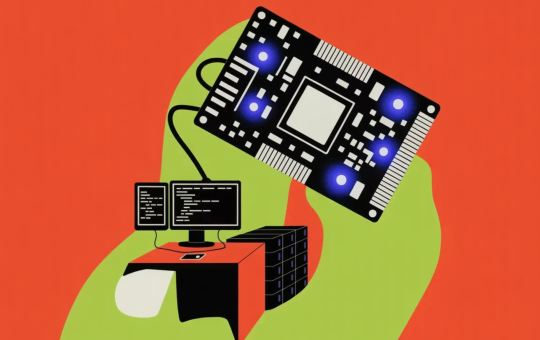
How to Build High-Performance GPU-Accelerated Simulations and Differentiable Physics Workflows Using NVIDIA Warp Kernels
angles = np.linspace(0.0, 2.0 * np.pi, n_particles, endpoint=False, dtype=np.float32) px0_np = 0.4 * np.cos(angles).astype(np.float32) py0_np = (0.7 + 0.15 *...
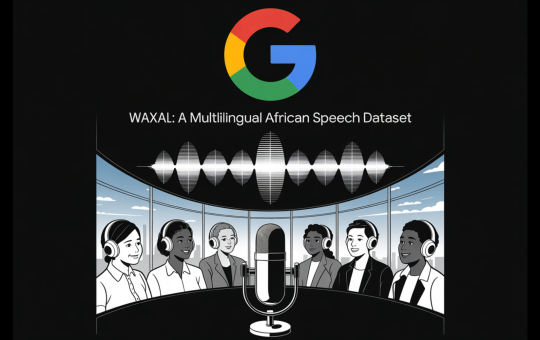
Google AI Releases WAXAL: A Multilingual African Speech Dataset for Training Automatic Speech Recognition and Text-to-Speech Models
Speech technology still has a data distribution problem. Automatic Speech Recognition (ASR) and Text-to-Speech (TTS) systems have improved rapidly for...

Narendar Modi And Miloni 👍👏💂#viral #zenattitude #today #news #ai
Check on YouTube

LIVE: Mukesh Ambani Speaks at India AI Impact Summit 2026 Delhi
Check on YouTube
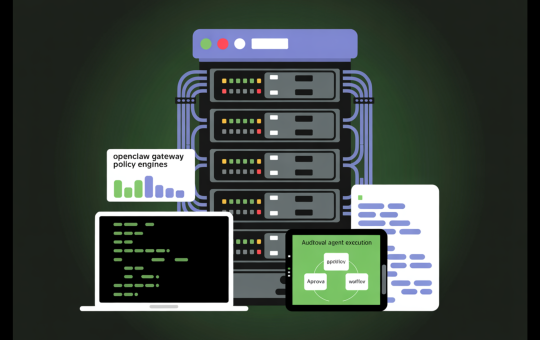
A Coding Implementation to Design an Enterprise AI Governance System Using OpenClaw Gateway Policy Engines, Approval Workflows and Auditable Agent Execution
In this tutorial, we build an enterprise-grade AI governance system using OpenClaw and Python. We start by setting up the...
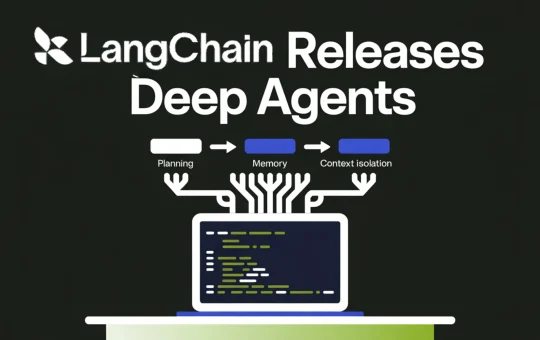
LangChain Releases Deep Agents: A Structured Runtime for Planning, Memory, and Context Isolation in Multi-Step AI Agents
Most LLM agents work well for short tool-calling loops but start to break down when the task becomes multi-step, stateful,...

How to Build an Autonomous Machine Learning Research Loop in Google Colab Using Andrej Karpathy’s AutoResearch Framework for Hyperparameter Discovery and Experiment Tracking
In this tutorial, we implement a Colab-ready version of the AutoResearch framework originally proposed by Andrej Karpathy. We build an...
Garry Tan Releases gstack: An Open-Source Claude Code System for Planning, Code Review, QA, and Shipping
What if AI-assisted coding became more reliable by separating product planning, engineering review, release, and QA into distinct operating modes?...

Google AI Introduces ‘Groundsource’: A New Methodology that Uses Gemini Model to Transform Unstructured Global News into Actionable, Historical Data
Google AI Research team recently released Groundsource, a new methodology that uses Gemini model to extract structured historical data from...
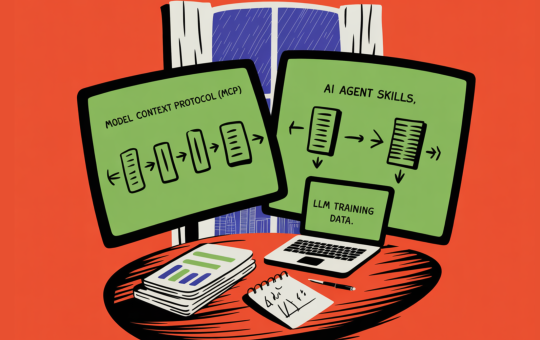
Model Context Protocol (MCP) vs. AI Agent Skills: A Deep Dive into Structured Tools and Behavioral Guidance for LLMs
In recent times, many developments in the agent ecosystem have focused on enabling AI agents to interact with external tools...

NEW Apple AI Wearables LEAKED! – AI Glasses, AI Pin & AI AirPods…
Check on YouTube
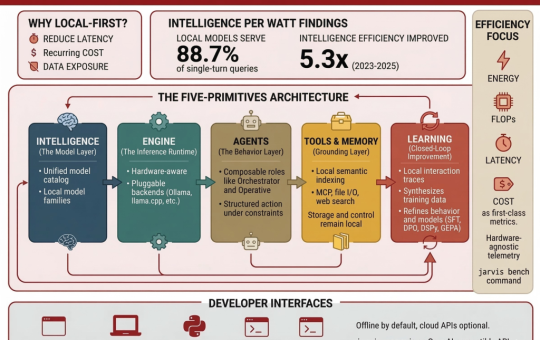
Stanford Researchers Release OpenJarvis: A Local-First Framework for Building On-Device Personal AI Agents with Tools, Memory, and Learning
Stanford researchers have introduced OpenJarvis, an open-source framework for building personal AI agents that run entirely on-device. The project comes...
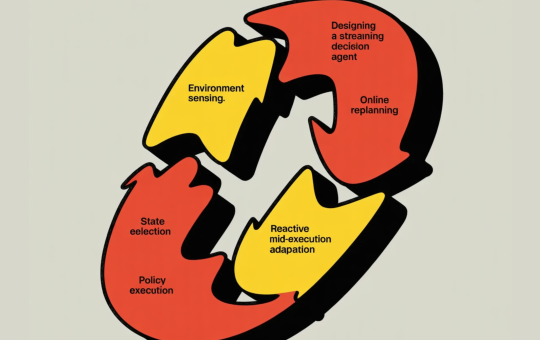
How to Design a Streaming Decision Agent with Partial Reasoning, Online Replanning, and Reactive Mid-Execution Adaptation in Dynamic Environments
@dataclass class AgentConfig: horizon: int = 6 replan_on_target_move: bool = True replan_on_obstacle_change: bool = True max_steps: int = 120 think_latency:...

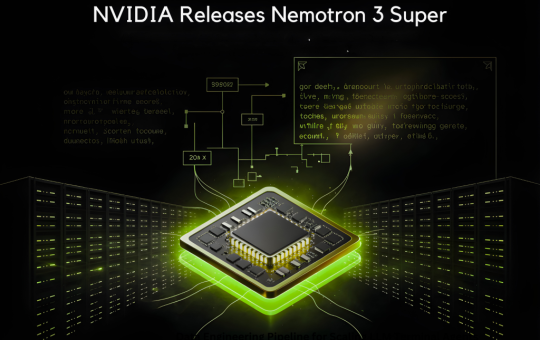
NVIDIA Releases Nemotron 3 Super: A 120B Parameter Open-Source Hybrid Mamba-Attention MoE Model Delivering 5x Higher Throughput for Agentic AI
The gap between proprietary frontier models and highly transparent open-source models is closing faster than ever. NVIDIA has officially pulled...
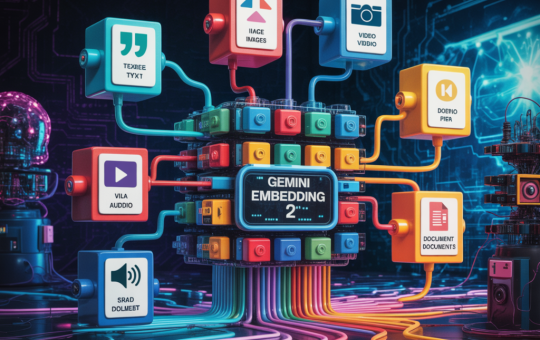
Google AI Introduces Gemini Embedding 2: A Multimodal Embedding Model that Lets Your Bring Text, Images, Video, Audio, and Docs into the Embedding Space
Google expanded its Gemini model family with the release of Gemini Embedding 2. This second-generation model succeeds the text-only gemini-embedding-001...

NVIDIA AI Releases Nemotron-Terminal: A Systematic Data Engineering Pipeline for Scaling LLM Terminal Agents
The race to build autonomous AI agents has hit a massive bottleneck: data. While frontier models like Claude Code and...
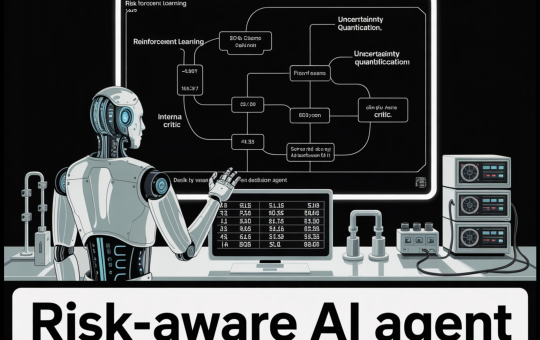
How to Build a Risk-Aware AI Agent with Internal Critic, Self-Consistency Reasoning, and Uncertainty Estimation for Reliable Decision-Making
class AgentAnalyzer: @staticmethod def plot_response_distribution(result: Dict): fig, axes = plt.subplots(2, 2, figsize=(14, 10)) fig.suptitle('Agent Response Analysis', fontsize=16, fontweight="bold") responses =...