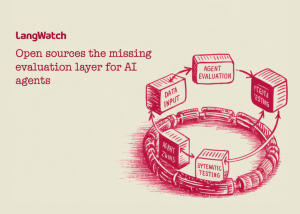

LangWatch Open Sources the Missing Evaluation Layer for AI Agents to Enable End-to-End Tracing, Simulation, and Systematic Testing
As AI development shifts from simple chat interfaces to complex, multi-step autonomous agents, the industry has encountered a significant bottleneck: non-determinism. Unlike traditional software where code follows a predictable path, agents built on LLMs introduce a high degree of variance.
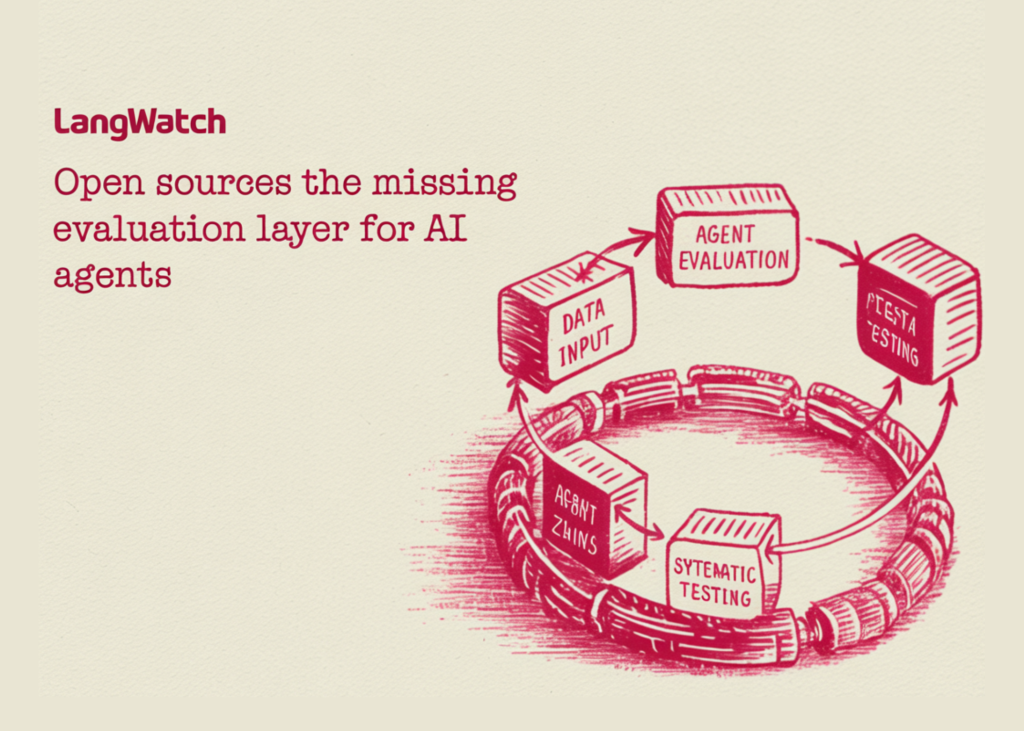
LangWatch is an open-source platform designed to address this by providing a standardized layer for evaluation, tracing, simulation, and monitoring. It moves AI engineering away from anecdotal testing toward a systematic, data-driven development lifecycle.
The Simulation-First Approach to Agent Reliability
For software developers working with frameworks like LangGraph or CrewAI, the primary challenge is identifying where an agent’s reasoning fails. LangWatch introduces end-to-end simulations that go beyond simple input-output checks.
By running full-stack scenarios, the platform allows developers to observe the interaction between several critical components:

The Agent: The core logic and tool-calling capabilities.
The User Simulator: An automated persona that tests various intents and edge cases.
The Judge: An LLM-based evaluator that monitors the agent’s decisions against predefined rubrics.
This setup enables devs to pinpoint exactly which ‘turn’ in a conversation or which specific tool call led to a failure, allowing for granular debugging before production deployment.
Closing the Evaluation Loop
A recurring friction point in AI workflows is the ‘glue code’ required to move data between observability tools and fine-tuning datasets. LangWatch consolidates this into a single Optimization Studio.
The Iterative Lifecycle
The platform automates the transition from raw execution to optimized prompts through a structured loop:
This process ensures that every prompt modification is backed by comparative data rather than subjective assessment.
Infrastructure: OpenTelemetry-Native and Framework-Agnostic
To avoid vendor lock-in, LangWatch is built as an OpenTelemetry-native (OTel) platform. By utilizing the OTLP standard, it integrates into existing enterprise observability stacks without requiring proprietary SDKs.
The platform is designed to be compatible with the current leading AI stack:
Orchestration Frameworks: LangChain, LangGraph, CrewAI, Vercel AI SDK, Mastra, and Google AI SDK.
Model Providers: OpenAI, Anthropic, Azure, AWS, Groq, and Ollama.
By remaining agnostic, LangWatch allows teams to swap underlying models (e.g., moving from GPT-4o to a locally hosted Llama 3 via Ollama) while maintaining a consistent evaluation infrastructure.
GitOps and Version Control for Prompts
One of the more practical features for devs is the direct GitHub integration. In many workflows, prompts are treated as ‘configuration’ rather than ‘code,’ leading to versioning issues. LangWatch links prompt versions directly to the traces they generate.
This enables a GitOps workflow where:
Prompts are version-controlled in the repository.
Traces in LangWatch are tagged with the specific Git commit hash.
Engineers can audit the performance impact of a code change by comparing traces across different versions.
Enterprise Readiness: Deployment and Compliance
For organizations with strict data residency requirements, LangWatch supports self-hosting via a single Docker Compose command. This ensures that sensitive agent traces and proprietary datasets remain within the organization’s virtual private cloud (VPC).
Key enterprise specifications include:
ISO 27001 Certification: Providing the security baseline required for regulated sectors.
Model Context Protocol (MCP) Support: Allowing full integration with Claude Desktop for advanced context handling.
Annotations & Queues: A dedicated interface for domain experts to manually label edge cases, bridging the gap between automated evals and human oversight.
Conclusion
The transition from ‘experimental AI’ to ‘production AI’ requires the same level of rigor applied to traditional software engineering. By providing a unified platform for tracing and simulation, LangWatch offers the infrastructure necessary to validate agentic workflows at scale.
Check out the GitHub Repo here. Also, feel free to follow us on Twitter and don’t forget to join our 120k+ ML SubReddit and Subscribe to our Newsletter. Wait! are you on telegram? now you can join us on telegram as well.